

Your data centre’s UPS system may be reporting normal operation, but how confident are you that every battery will perform when it’s needed most?
UPS batteries can deteriorate without obvious warning signs. A battery string may appear healthy during routine checks, while individual batteries are already showing signs of declining performance. Without the right monitoring in place, these developing faults can go unnoticed until a power interruption exposes the problem.
For data centre operators responsible for maintaining uptime, that presents a significant risk.
Why UPS Battery Failures Remain a Serious Concern
Recent high-profile infrastructure outages have highlighted the importance of reliable backup power systems. When critical power infrastructure fails, the consequences can include operational disruption, financial losses and reputational damage.
The Uptime Institute’s 2026 Annual Outage Analysis identifies power as the leading cause of impactful data centre outages, with UPS systems, transfer switches and generators among the main contributors.
The risks became clear in March 2025, when a critical UPS battery failure contributed to a Google Cloud outage lasting more than six hours. Following a utility power failure, the UPS system couldn’t maintain the power required to support affected services.
Incidents like this reinforce the importance of understanding UPS battery condition and identifying developing faults before backup power is needed.
A single deteriorating battery within a string can reduce available backup runtime, potentially compromising the system’s ability to maintain critical operations until alternative power becomes available.
Are Traditional UPS Battery Checks Enough?
Planned UPS battery maintenance remains essential for maintaining reliable backup power. However, periodic inspections only provide a picture of battery condition at the time of testing.
Between maintenance visits, batteries can develop faults caused by ageing, temperature fluctuations, increased internal resistance or connection problems.
The IEEE 1184 standard for UPS battery systems provides guidance on battery selection, installation, maintenance and testing, reinforcing the importance of structured battery care.
Many UPS systems provide basic battery alarms and overall system status information, but these may not identify deterioration within individual batteries.
This creates a potential gap in visibility, particularly in data centres operating large battery installations.
Continuous UPS battery monitoring helps close that gap by providing ongoing information about individual battery condition.
How Continuous UPS Battery Monitoring Reduces Risk
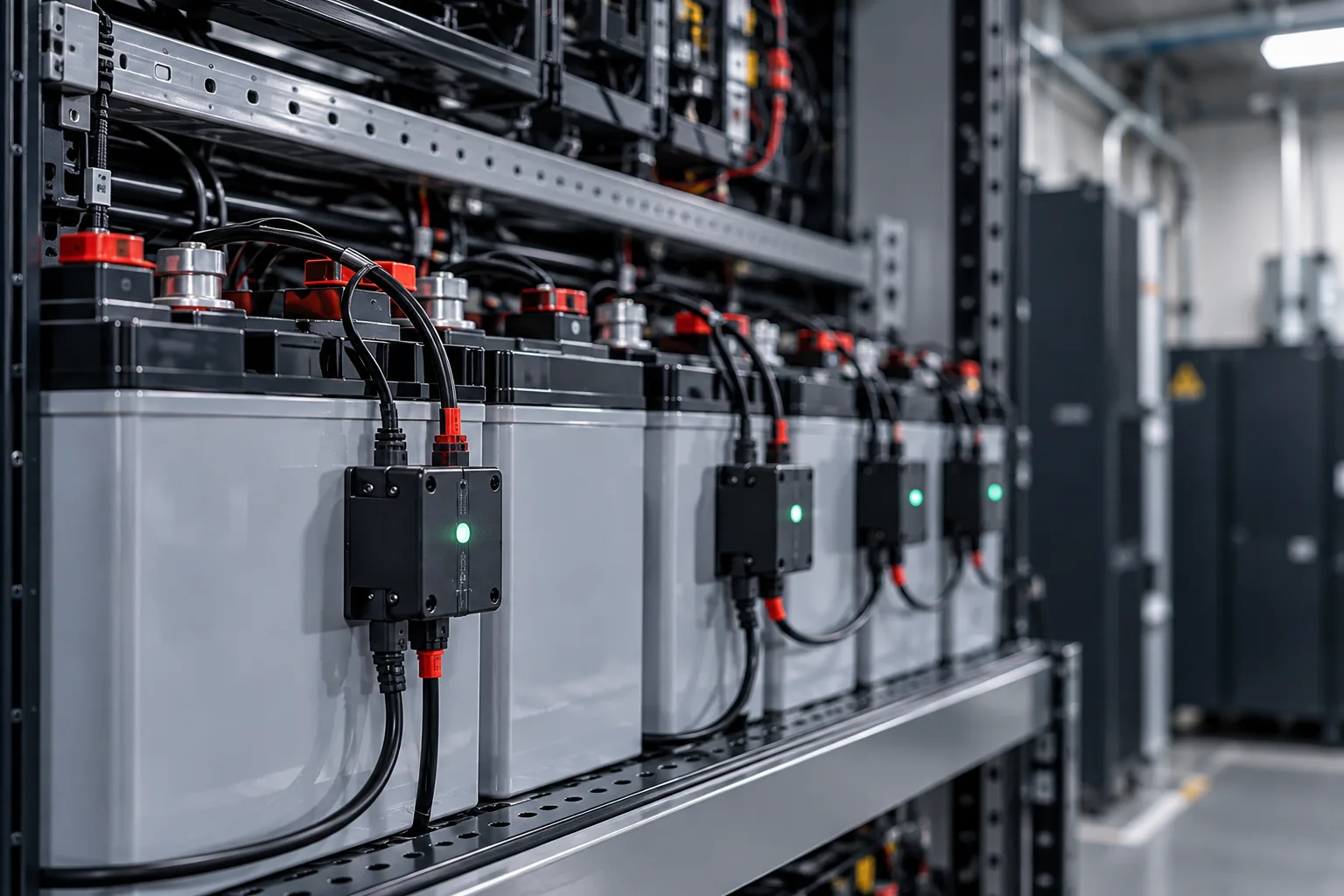
Dedicated UPS battery monitoring systems track key battery measurements and highlight changes that may indicate developing problems.
Depending on the technology, these systems can monitor voltage, internal resistance or impedance, and temperature, providing valuable information about battery performance over time.
For data centre operators, the benefits include:
- Earlier fault detection: Identify abnormal battery readings before they develop into more serious problems.
- Individual battery visibility: Locate deteriorating batteries within large UPS battery strings.
- 24/7 condition monitoring: Track battery performance between scheduled maintenance visits.
- Better maintenance planning: Use battery condition data to support investigations and UPS battery replacement decisions.
- Greater operational confidence: Give facilities and IT teams clearer information about their critical backup power infrastructure.
Continuous monitoring also provides historical data, helping operators recognise gradual deterioration that may otherwise be missed during individual inspections.
Does Your Existing UPS Monitoring Provide Enough Information?
A UPS dashboard showing normal battery status doesn’t necessarily confirm that every individual battery is performing as expected.
For organisations managing critical infrastructure, it’s worth considering whether their existing monitoring system can identify a deteriorating battery, track its condition over time and alert maintenance teams when further investigation is required.
At UPS Battery Monitoring, we provide access to established battery monitoring technologies, including PowerShield8, Ablerex Enerbatt 3G, Alpais BMS and Franklin Electric CELLGUARD.
These solutions offer different monitoring capabilities to suit a range of UPS battery installations, helping organisations gain greater visibility of battery condition and make informed maintenance decisions.
Protect Your Data Centre Before the Next Power Interruption
Continuous UPS battery monitoring works alongside planned UPS maintenance, providing additional information to help identify potential weaknesses before they affect operational reliability.
For data centres where even a short interruption can have serious consequences, understanding the condition of individual UPS batteries is an important part of managing risk.
UPS Battery Monitoring, part of Uninterrupted Power Solutions, helps organisations identify suitable monitoring solutions for their critical power infrastructure.
Want to know more about the condition of your UPS batteries?
Contact UPS Battery Monitoring to discuss your installation and discover how continuous monitoring could help protect your data centre against unexpected battery failures.